
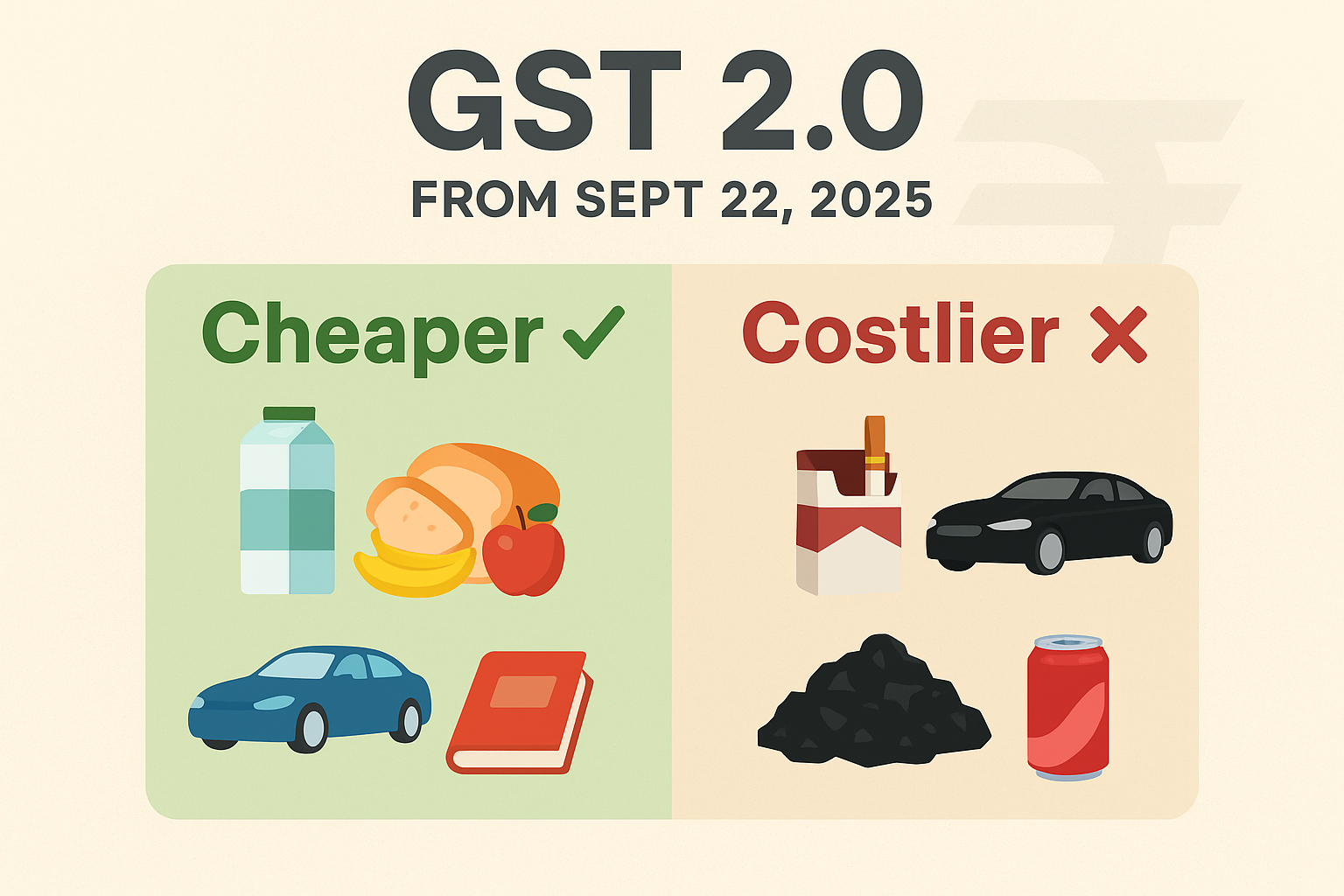

The 56th GST Council Meeting, chaired by Union Finance Minister Nirmala Sitharaman on September 3 in New Delhi, has approved a major revamp of India’s indirect tax structure. Popularly called GST 2.0, the new framework will come into effect from September 22, 2025.
These changes are expected to directly impact household budgets, businesses, and industries. While many daily-use goods and essential services will get cheaper, sin goods, luxury items, and coal-based energy will attract higher taxation.
GST 2.0: Goods and Services That Will Get Cheaper
1. Food & Daily Essentials
- Milk products: UHT milk becomes tax-free (earlier 5%). Condensed milk, butter, ghee, paneer, and cheese move from 12% to 5% or nil.
- Staple foods: Malt, starches, pasta, cornflakes, biscuits, chocolates, and cocoa products now at 5% (earlier 12–18%).
- Dry fruits & nuts: Almonds, cashews, pistachios, hazelnuts, and dates down from 12% to 5%.
- Sugar & confectionery: Refined sugar, syrups, candies, and toffees reduced to 5%.
- Other packaged foods: Vegetable oils, edible spreads, sausages, meat preparations, fish products, and malt extracts down to 5%.
- Namkeens & snacks: Bhujia, mixtures, and similar packaged items cut from 18% to 5%.
- Drinking water: Packaged mineral and aerated waters (without sugar/flavour) down from 18% to 5%.
2. Agriculture & Fertilisers
- Fertilisers reduced from 12–18% to 5%.
- Select agricultural inputs like seeds and crop nutrients rationalised to 5%.
3. Healthcare & Education
- Life-saving drugs, medical devices, and essential health products down to 5% or nil.
- Books, learning aids, and educational services reduced to nil or 5%.
4. Consumer Goods
- Electronics: Entry-level appliances move from 28% to 18%.
- Footwear & textiles: GST cut from 12% to 5%.
- Paper products: Certain grades reduced from 12% to nil.
- Personal care: Hair oil, shampoo, toothpaste, dental floss from 18% to 5%.
5. Auto Sector
- Small cars & motorcycles (≤350cc): Reduced from 28% to 18%.
- Large cars & motorcycles: At 40% (no cess removed).
- Car parts: Standardised at 18%.
- EVs continue at just 5%.
6. Other Sectors
- Renewable energy devices: Down from 12% to 5%.
- Construction raw materials: 12% to 5%.
- Sports goods & toys: 12% to 5%.
- Leather, wood, handicrafts: Moved to 5%.
👉 Impact: From groceries and footwear to fertilisers, renewable energy devices, and EVs – GST 2.0 promises significant savings for households, small businesses, and the middle class.
GST 2.0: What Gets Costlier
1. Sin Goods & Luxury Items
- Pan masala, gutkha, cigarettes, bidi, chewing tobacco, and zarda remain under high GST + compensation cess.
- Tax valuation will now be based on Retail Sale Price (RSP) instead of transaction value.
- All sugary aerated beverages move from 28% to 40% GST.
- Cigarettes, premium liquor, and luxury cars continue under the 40% slab.
- Imported armoured luxury sedans remain exempt only for government use (e.g., President’s Secretariat).
2. Energy & Fuels
- Coal tax hiked from 5% to 18%, increasing input costs for coal-based industries and power producers.
3. Services
- Restaurants in “specified premises” lose ITC benefits on 18% GST option.
- Lottery and intermediary services will follow revised valuation rules, keeping taxation higher.
Key Takeaway
- Cheaper from September 22: Milk, food staples, dry fruits, footwear, textiles, small cars, EVs, renewable energy, healthcare products, and education materials.
- Costlier under GST 2.0: Sin goods, luxury cars, sugary drinks, coal, certain restaurant and lottery services.
The new GST structure aims to ease inflationary pressure on households, promote sustainable consumption, and maintain a high tax burden on sin and luxury goods.
Frequently Asked Questions (FAQs) on GST 2.0
1. What is GST 2.0 in India?
GST 2.0 refers to the revised indirect tax structure announced during the 56th GST Council meeting. It brings down tax rates on essential goods while keeping luxury and sin goods under higher slabs.
2. From when will GST 2.0 rates be applicable?
The new GST rates under GST 2.0 will be effective from September 22, 2025.
3. Which items are cheaper under GST 2.0?
Milk products, dry fruits, packaged foods, footwear, textiles, renewable energy devices, small cars, EVs, and healthcare products will get cheaper.
4. Which items are costlier under GST 2.0?
Cigarettes, pan masala, gutkha, sugary drinks, coal, luxury cars, and certain restaurant and lottery services will become costlier.
5. Why has coal become costlier under GST 2.0?
Coal has been moved from the 5% GST slab to 18% to increase revenue and promote the transition toward renewable energy.
6. Will GST on electric vehicles (EVs) change?
No. GST on EVs remains at 5%, making them affordable and promoting clean mobility.