

Introduction
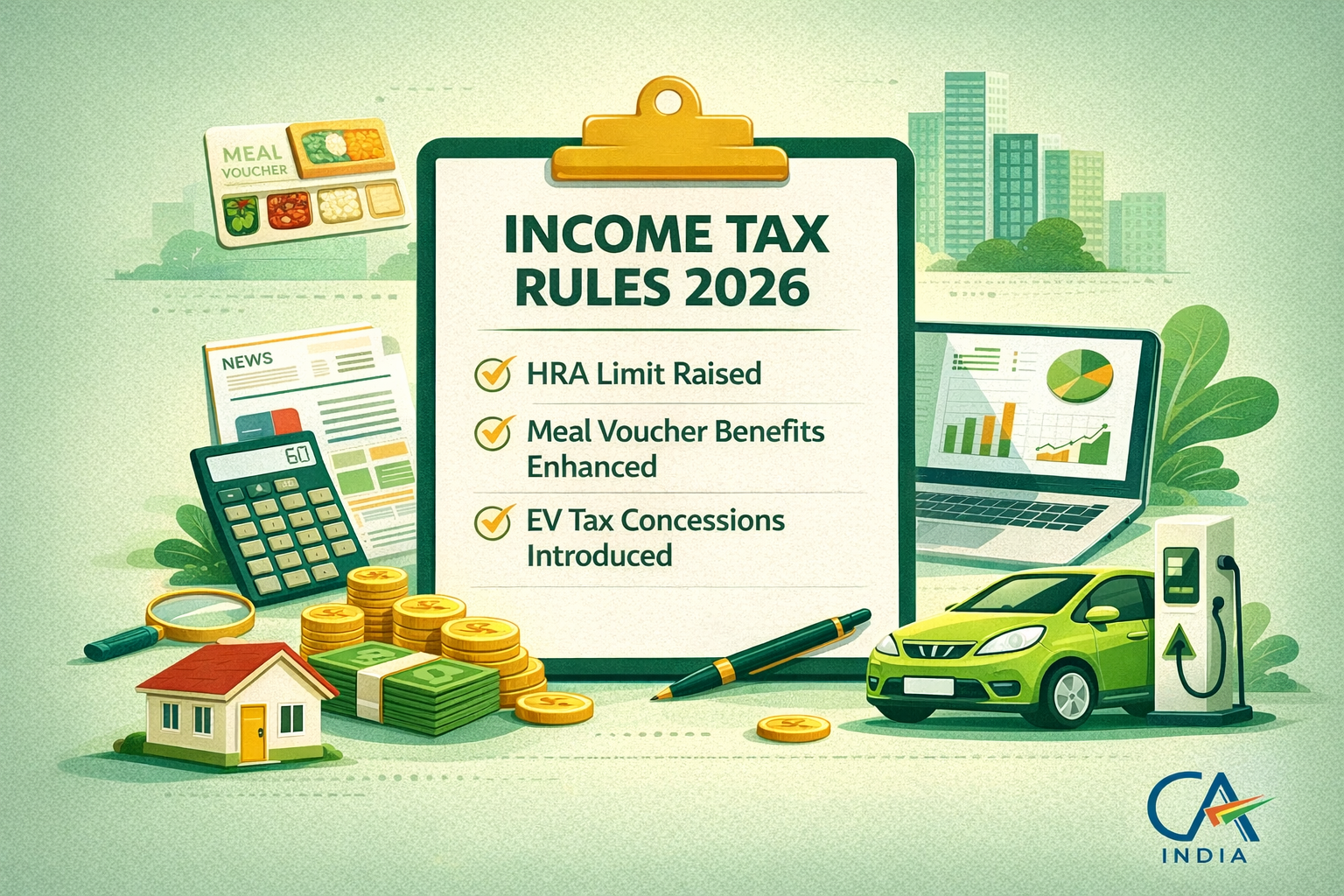
The Government of India has notified the Income Tax Rules 2026, marking a significant shift in the taxation framework effective from 1st April 2026. These rules aim to modernize tax compliance, simplify calculations, and bring greater transparency to the system.
For salaried individuals, startups, and businesses, these changes directly impact salary structuring, tax planning, and compliance requirements.
In this article, we explain the key highlights of Income Tax Rules 2026 and how they affect taxpayers.
1. Major Boost in Meal Voucher Tax Benefits
One of the most notable changes is related to meal vouchers and food benefits.
- Tax exemption increased to ₹200 per meal
- Applicable even under the new tax regime
- Potential tax-free benefit up to ₹8,800 per month
Earlier, this benefit was limited and not available under the new regime. The updated rules now extend this relief, making salary structuring more tax-efficient.
👉 This is a major advantage for salaried employees, especially those receiving meal cards like Sodexo or Pluxee.
2. Higher HRA Exemption for More Cities
The government has expanded the list of cities eligible for 50% HRA exemption.
Newly added cities:
- Bengaluru
- Hyderabad
- Pune
- Ahmedabad
Previously, only metro cities like Delhi, Mumbai, Chennai, and Kolkata qualified.
Now, employees in these additional cities can claim higher tax deductions on rent, reducing taxable income significantly.
3. Stricter Disclosure Norms for HRA Claims
To improve transparency, the new rules introduce stricter documentation:
- Mandatory disclosure of relationship with landlord
- Increased tracking and verification of rent payments
This move aims to prevent misuse of HRA claims, especially when rent is paid to relatives.
4. Big Increase in Children’s Allowances
Allowances related to children have been revised significantly after many years.
Updated limits:
- Children’s education allowance: ₹3,000/month per child
- Hostel expenditure allowance: ₹9,000/month per child
Earlier limits were extremely low (₹100 and ₹300), making this a 30x increase in some cases.
5. New Tax Rules for Electric Vehicles (EVs)
The government has introduced clear tax treatment for electric vehicles (EVs) provided by employers.
- EVs now included in concessional perquisite valuation
- Treated similar to small engine vehicles
- Monthly taxable value:
- ₹5,000 (if employer bears cost)
- ₹2,000 (if employee bears cost)
This change removes earlier ambiguity and promotes eco-friendly mobility.
6. Revised PAN Requirement Thresholds
The new rules also revise PAN-related compliance thresholds:
- Mandatory PAN for transactions above:
- ₹10 lakh (cash deposits/withdrawals annually)
- ₹5 lakh (purchase of motor vehicles)
This is aimed at improving financial tracking and reducing tax evasion.
7. Standardisation of Perquisites (Salary Benefits)
The Income Tax Rules 2026 bring clarity to employee benefits (perquisites) such as:
- Company cars
- Interest-free loans
- Housing benefits
The valuation methods are now more structured and standardized, reducing confusion for both employers and employees.
8. Shift Towards Digital and Transparent Tax System
A key objective of the new rules is to:
- Increase digital tracking of transactions
- Reduce manual interpretation
- Improve compliance and reporting accuracy
The system is becoming more data-driven, leaving less room for ambiguity.
Impact of Income Tax Rules 2026
For Salaried Individuals
- Higher tax benefits through allowances
- Better salary structuring opportunities
- Increased compliance requirements
For Businesses & Employers
- Need to restructure employee compensation
- More detailed reporting obligations
- Clarity in perquisite valuation
For Professionals (CAs & Consultants)
- Greater role in advisory and compliance
- Increased demand for tax planning services
Practical Example
A salaried employee receiving:
- Meal vouchers
- HRA in Bengaluru
- Children’s education allowance
can now significantly reduce taxable income compared to previous years.
This makes tax planning more strategic than ever.
Conclusion
The Income Tax Rules 2026 represent a major step toward a modern, transparent, and structured tax system in India.
Key takeaways:
- Higher exemptions and allowances
- Expanded HRA benefits
- Inclusion of EV taxation clarity
- Stricter compliance and disclosures
For taxpayers, this means better planning opportunities but also higher responsibility in maintaining accurate records.
FAQs
What is the effective date of Income Tax Rules 2026?
The rules are effective from 1st April 2026.
Are meal vouchers tax-free under the new regime?
Yes, meal vouchers up to ₹200 per meal are now tax-exempt even under the new tax regime.
Which cities now qualify for higher HRA exemption?
Bengaluru, Hyderabad, Pune, and Ahmedabad have been added.
Are EV benefits taxable?
Yes, but under concessional valuation rules, making them more tax-efficient.